

Why Getting Outside Matters for Older Adults
June 30, 2026 | Health & Wellness, Hospice, Kline Galland Home, Mary Schwartz Summit, Resources


Stepping outside offers what no indoor space can replicate: the warmth of the sun, the smell of fresh air, and a quiet sense that you are surrounded by something bigger than yourself. For older adults, those moments are not just pleasant. They contribute to both mental and physical wellbeing.
At Kline Galland, we understand that access to nature is an important part of wellness. Our locations include easy-to-access gardens and outdoor spaces for patients and residents to enjoy.
Why is spending time outdoors good for older adults?
Nature does a lot of heavy lifting when it comes to health. Fresh air and natural light support better sleep. Green spaces reduce stress and lower anxiety. Time outside encourages movement and social interaction.
Spending time in nature has been linked to improved mood, sharper focus, and greater emotional resilience. For older adults managing chronic conditions, social isolation, or cognitive changes, access to the outdoors can be a quiet but powerful part of a holistic care plan.

How much time in nature is beneficial?
According to the American Psychological Association, spending at least two hours in nature each week is linked to significantly greater health and well-being. That holds true across age groups, including older adults and those with chronic health conditions.
Those two hours don’t have to happen all at once. A short walk each morning, an afternoon in a garden, or time spent on a terrace all count.
Washington state residents are fortunate to have access to some of the most stunning natural landscapes in the country – old-growth forests, parks, coastal shores, and of course, dramatic peaks all around us.
At Kline Galland, flourishing nature is right outside and woven into daily life. Both of our Seattle locations feature thoughtfully designed outdoor spaces that bring the benefits of fresh air and green space right to residents, patients, and their families.
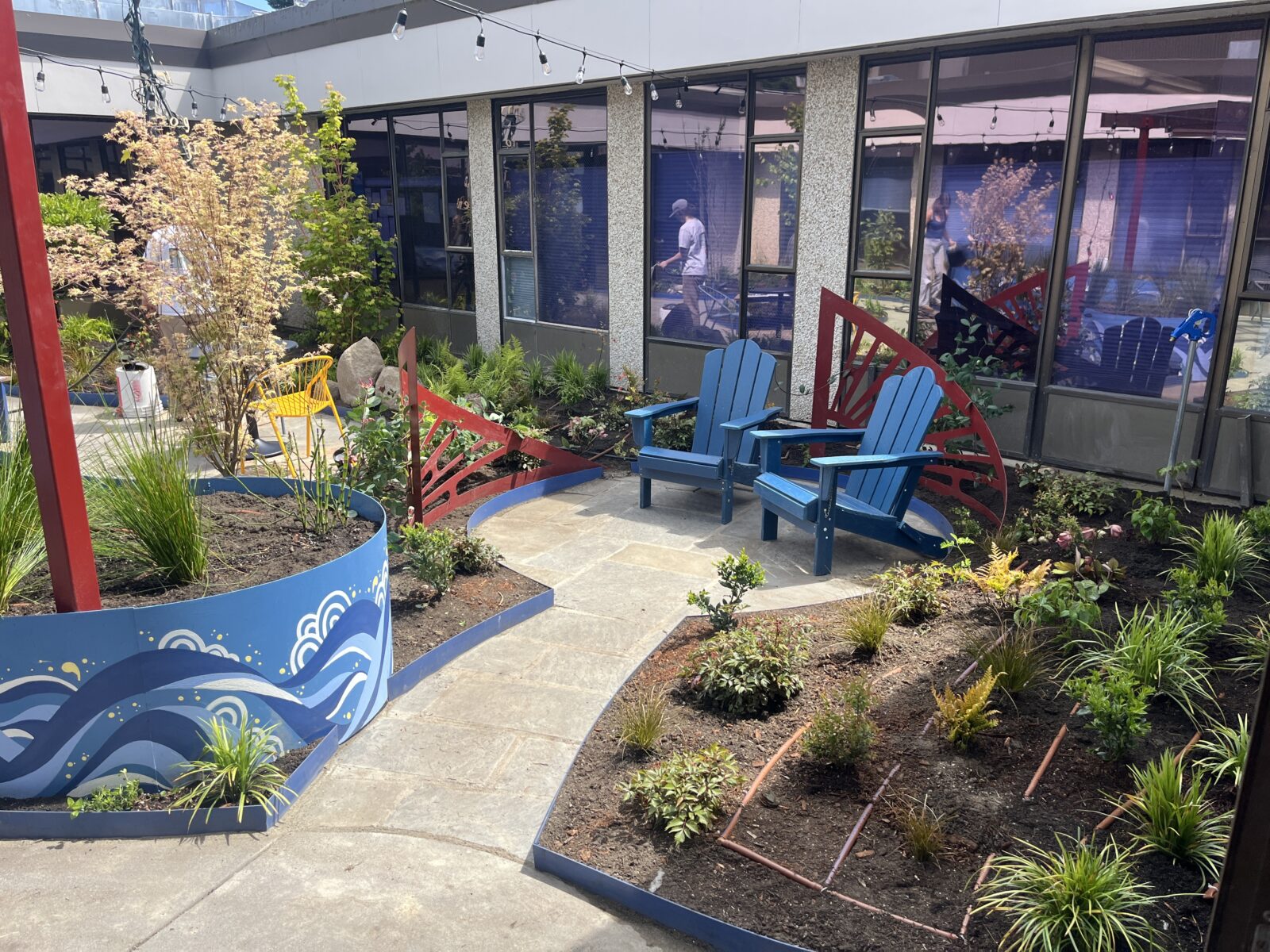
Outdoor spaces at Kline Galland
At Mary Schwartz Summit in First Hill, residents enjoy a beautifully landscaped fourth-floor terrace offering fresh air and natural light. The facility also offers easy access to nearby neighborhood parks and the newly redesigned Seattle Waterfront Park and Overlook Walk.
At Kline Galland Campus at Seward Park, residents and staff have access to several distinct outdoor spaces:
- Bender Family Garden: Provides residents and patients a beautiful space to enjoy quality time with their families and make special memories together
- Quint Sensory Garden: Filled with fragrant and textural plants, as well as soothing sounds to engage all five senses, promoting neuroplasticity and stress reduction
- Hospice Focused Garden: A serene environment, featuring native plants, designed specifically to foster a sense of peace for our Hospice patients and their families
- Cohen Staff Garden: Made possible by Jeff and Betsy Cohen, this garden offers our staff a quiet retreat to step away, breathe, and reset
Kline Galland Campus at Seward Park also shares its name with one of Seattle’s most beloved green spaces. Seward Park, with its fishing piers, swimming beaches, forested trails, and views of Lake Washington, is right at our doorstep – extending the outdoor experience well beyond campus grounds.
This summer, Campus at Seward Park will also unveil the Chai and Joy Mann Haiku Garden, a new outdoor space dedicated to Memory Care residents and patients.

The simple power of getting outside
The great outdoors doesn’t have to mean a big trip or a long hike. It can be just as simple as a garden path, a familiar bench, or the smell of something blooming nearby. Those small moments matter. They restore the mind, ease the body, and lift the spirit. Getting outside, even briefly, is one of the simplest gifts we can give ourselves.
To learn more about Kline Galland’s Family of Services, visit www.klinegalland.org.
With information from the American Psychological Association, National Library of Medicine, National Park Service and Seattle.gov.